




Current Work

The Face of the Republican Party: Former Trump Strategist Steve Bannon Helped Plan the January 6 Rally, Telling the President, “It’s Time to Kill the Biden Administration in the Crib.” © 2022 Jeff Gates
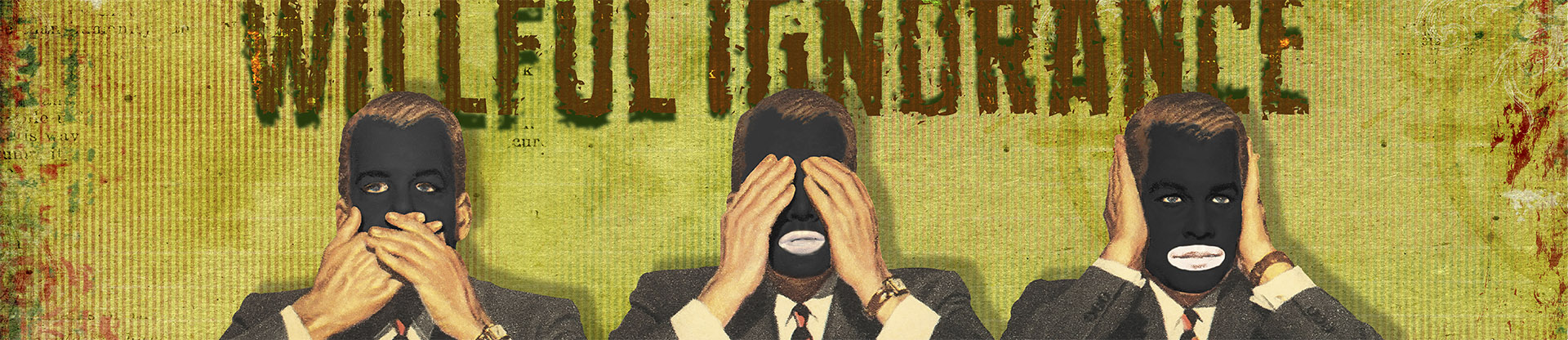
With an interest in the intersection of art and culture, I have spent the last fifteen years creating imagery that reflects the troubled state of American political discourse. To date, I have produced over 300 images documenting the evolution of contemporary American politics. As an artist and writer with degrees in political science, graphic design, and photography, I have combined my experiences to construct a visual history of contemporary American politics.
In 2018, Google Arts & Culture invited me to exhibit this body of work. It was their first significant effort to address American politics in art. Their online platform enabled me to write a narrative connecting my images to the political process, forming chapters of American history from the Tea Party to the present.
Faces of the Republican Party‚ is the latest addition to this series. So far, I have made over eighty portraits of Trump and his acolytes, with plans for more. Each portrait includes a fact or quote that provides context to that person’s conduct. The portraits serve as visceral reactions to these facts.
Previous Work
Throughout my career, I’ve created a diverse range of work, often using new technologies to comment on social issues and behaviors. While my projects often look different, the common thread connecting all of them is the communities I build into each project to foster interaction and dialogue. Two examples are My Tweet Tooth, where I tweeted my root canal in real time to dentists across North America, and the auctioning of my personal demographics on eBay.
In 1990, I founded Artists for a Better Image (ArtFBI) to explore stereotypes of contemporary artists in our society. During the first culture war over the work of Robert Mapplethorpe and Andres Serrano, I wrote a history of artist stereotypes for the New York Foundation for the Arts. Additionally, I gathered depictions of artists from television and film and traveled across the country talking with artists, students, and the general public about our role in contemporary society.
I taught college photography and computer graphics for twenty-three years before transitioning to the museum world, where I served as the Lead Producer for New Media Initiatives at the Smithsonian American Art Museum for the next twenty-two years. Curious about how technology could improve visitors’ experiences, in 2005, I launched the first blog at the Smithsonian, Eye Level.
My work is part of several museum collections, including the J. Paul Getty Museum, the Georges Pompidou Centre, the Victoria and Albert Museum, the Baltimore Museum of Art, the Los Angeles County Museum of Art, and the Smithsonian American Art Museum. I have received two National Endowment for the Arts Artist Grants for my photography, including one for my photo documentary In Our Path. This project tells the story of the construction and social impact of the “last” freeway to be built in Los Angeles. These photographs and accompanying essays are housed in the collection of the Huntington Library, a major archive for Southern California history and art.
I have written for several publications, including The Washington Post, The Atlantic, Smithsonian, and for National Public Radio. I am the author of Uneventful: The Rise of Photography, which explores how technology and culture have driven changes in the medium.
Postscript
As a teacher, I often encouraged my students to take risks with their work. Now, I’m reflecting on that same issue, not only regarding my art but also my personal safety. In the fall of 2024, the American University Museum in DC exhibited “Faces of the Republican Party.” Right after The Washington Post reviewed the show, the Heritage Foundation visited the museum to document my work for their files. The thought that I could be seen as a political liability is chilling, and it would be foolish not to take this seriously. This is a pivotal moment in our history and a crucial moment in my life and career as an artist.
Jeff Gates